
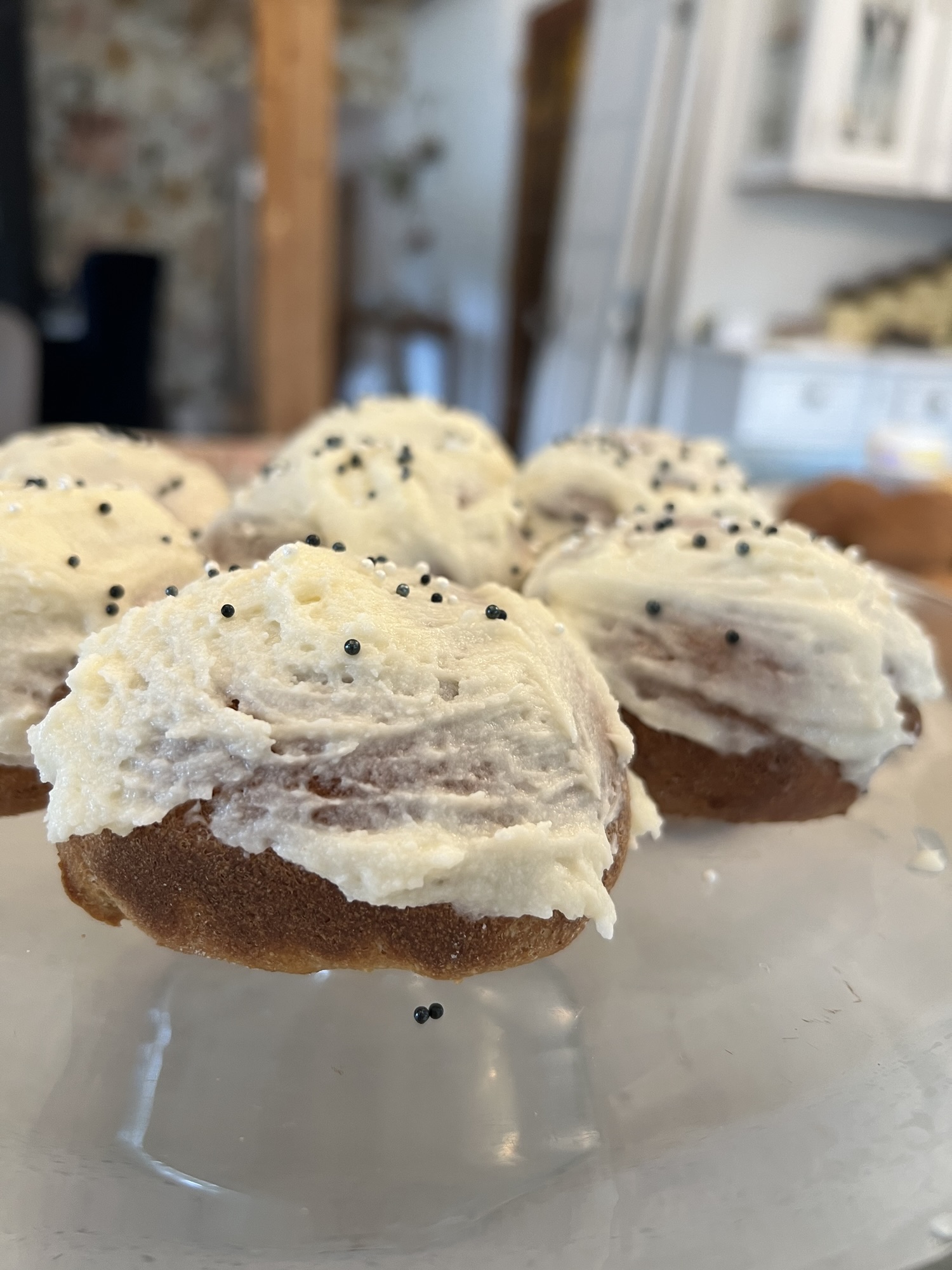
Paska (Spring Citrus Bread)
This is one of those recipes that marks a season all by itself. We make paska in the spring, just before our unleavened bread season begins, and the children look forward to it every year. It has become our spring bread, the one that shows up when family gathers, when the kitchen starts to smell like citrus again, and when everyone quietly starts counting how many buns they think they can claim.

This version uses a tangzhong to keep the dough especially soft, along with fresh-milled flour and a full citrus base blended right into the liquid. Using two lemons gives it just enough brightness to carry through the whole grain flour without needing to adjust anything else.
The icing is soft, light, and spreadable. It melts into the bread rather than sitting stiffly on top. For this batch, a half recipe is usually enough, but it can easily be doubled and kept in the fridge for other baking.Jump to Recipe

Paska Recipe
Ingredients
- 1 cup water
- 50 g fresh-milled flour (for tangzhong)
- 2 medium lemons
- 1 medium orange
- 1 1/4 cups milk
- 1/2 cup butter
- 3 eggs
- 3/4 cup sugar
- 1 tsp salt
- 2 1/2 tsp active dry yeast
- 1200–1250 g fresh-milled bread flour total (suggested hard white or hard red)
Instructions
- Begin by making the tangzhong. In a small saucepan, whisk together the water and 50 grams of flour. Cook over medium heat, stirring constantly, until it becomes thick, smooth, and begins to pull away from the pan. It should resemble a soft paste. Set it aside to cool while you prepare the rest of the ingredients.
- Prepare the citrus. Using a vegetable peeler, remove the outer rind from the lemons and orange in strips. Then remove the white pith so only the fruit remains. Break the fruit into sections, remove any seeds, and place both the fruit and the rind into a blender. Blend for two to three minutes until completely smooth.
- In a saucepan, heat the milk and butter together until just scalded. The butter should be melted and the mixture hot, with small bubbles forming, but not boiling. Let it cool slightly if needed, then pour it into the blender with the citrus mixture.
- Add the eggs, sugar, and salt to the blender and blend again until smooth and frothy. You should have just over 4 1/2 cups of liquid when measured below the foam.
- In a large bowl, combine 600 grams of flour with the yeast. Add the tangzhong and the blended liquid mixture, and mix into a shaggy dough. Let it rest for about five minutes so the flour can absorb the liquid.
- Gradually add the remaining flour, holding back a small portion at first. Knead until the dough comes together and begins to pull away from the sides. Let it rest briefly before assessing the texture. The dough should be soft and slightly tacky, not dry.
- Continue kneading for about ten minutes. As you work with it, the dough will become smoother, more elastic, and easier to handle. Avoid adding extra flour unless absolutely necessary.
- Place the dough in a bowl, cover it, and allow it to rise until doubled. This typically takes between 45 minutes and 1 1/2 hours, depending on the temperature of your space. Punch it down once during the rise.
- Shape the dough into buns, loaves, or mini loaves. This recipe makes approximately 24 to 30 buns depending on size. Arrange in pans and allow to rise again until puffy.
- Bake at 350°F until lightly golden and baked through. Buns typically take 13 to 15 minutes, while loaves take about 20 to 25 minutes depending on size.
Icing (Half Batch)
- 1/2 cup butter, softened
- 2 egg whites
- 1/2 Tbsp vanilla
- 1/2 Tbsp lemon juice
- pinch of salt
- 3 cups icing sugar
- Beat the butter until completely smooth and creamy. This step is important, as any lumps here will remain in the final icing.
- Add the egg whites gradually, mixing thoroughly after each addition so they fully incorporate into the butter.
- Add the vanilla, lemon juice, and salt, and beat again until smooth.
- Add the icing sugar one cup at a time, beating well between each addition. This ensures a smooth, lump-free icing.
- Continue mixing until the icing is light, fluffy, and very soft, with a texture similar to whipped butter.
Store icing in the fridge. It will firm up when cold, so allow it to come back to room temperature before using. Ice only what you plan to eat that day and keep the rest refrigerated.

Leave a Reply