

The truth about what’s really missing from white flour
One of the most common questions I get from new bakers is this: “Can I just sift my fresh-milled flour to make white flour?” The short answer? Not quite — and here’s why it matters.
How Commercial White Flour Is Made
Most people imagine that white flour is whole wheat flour with the bran sifted out. But in modern milling, that’s not what happens at all.
In large industrial mills, the wheat berry is broken apart before grinding. The bran and germ — the parts rich in fibre, oil, and nutrients — are separated and set aside so their natural oils don’t mix with the starch. Only the starchy endosperm is ground into the fine white powder we know as “all-purpose” flour.
That means commercial white flour isn’t 70% of the grain — it’s 100% of the endosperm and 0% of everything else. The bran and germ never even touch the finished flour.
What You Can’t Sift Back In
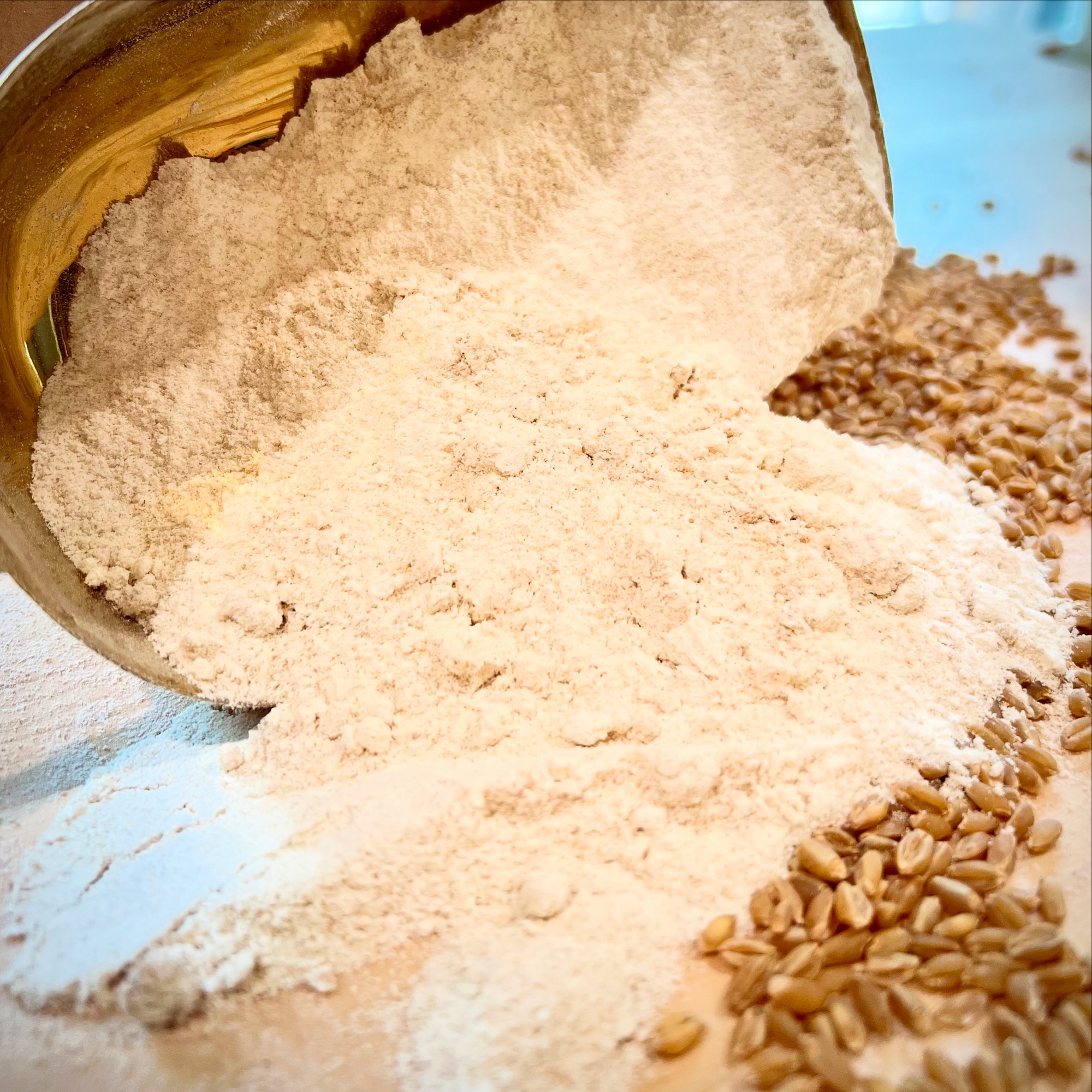
At home, even with the finest sieve or sifter, you can’t truly recreate that process. When you mill grain whole, the bran and germ are already blended into the flour. Lightly sifting (to around 80% extraction) simply removes the coarsest flakes — but the microscopic oils and nutrient traces from the germ remain throughout the flour.
That’s what makes fresh-milled flour so flavourful and nourishing. It still carries the wheat’s natural aroma, oils, and vitamins in every spoonful — something you can’t get back once they’ve been removed at the commercial level.
“Once the germ and bran are taken away, their oils, enzymes, and nutrients are gone for good.”
Why It Matters
The endosperm alone is mostly starch — and without fibre or fat to slow it down, your body digests it quickly, just like sugar. That’s why foods made from white flour can cause a quick energy spike followed by a crash.
Fresh-milled or whole flour behaves differently. The bran and germ naturally balance the grain: fibre slows digestion, oils support absorption, and minerals help your body process carbohydrates gently and steadily.
The Takeaway
You can’t make true white flour by sifting whole wheat — but you can make beautiful, light, lightly-sifted flour that still holds the heart of the grain. Every mill, every baker, and every kitchen will find their own balance.
So don’t chase “perfect white bread.” Bake what nourishes. Even a gently sifted flour is alive with flavour, oil, and nutrition — something no factory process can replace.
“When food stays whole, so do we.
Leave a Reply