
(Complete video tutorial also available below)
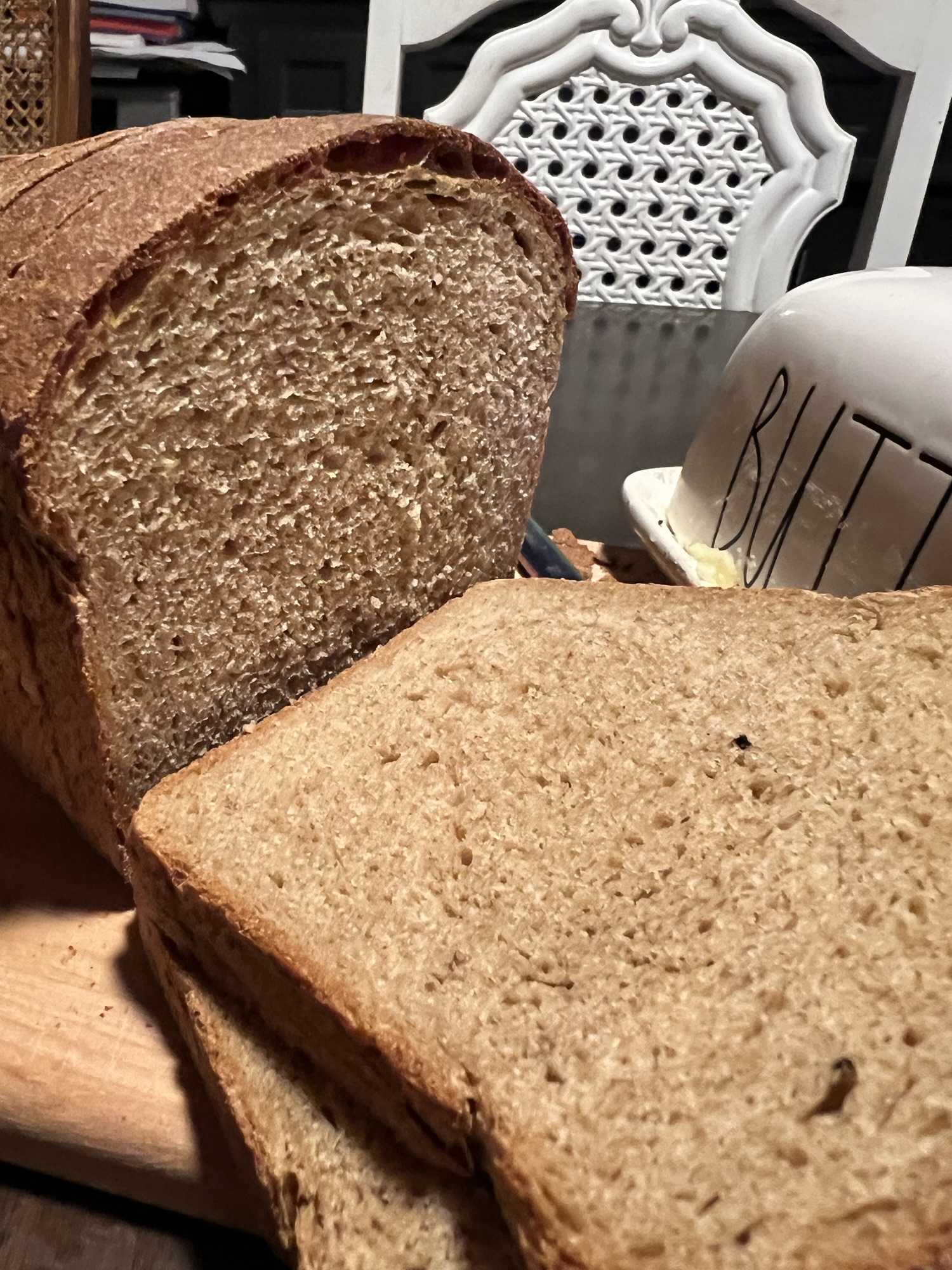
The goal with this recipe is simple: I wanted to create a really easy, almost foolproof sandwich loaf that is soft, flavourful, and actually holds up past day one.
I call this almost foolproof because I bake a lot, and I can still mess things up. So I hesitate to say anything is completely foolproof. But this one is a lot more forgiving. The way it’s built gives you a bit more grace with timing and makes it harder to overproof.
Fresh-milled whole wheat bread can taste amazing right out of the oven, but a lot of recipes fall apart the next day. They get crumbly, dry, or just don’t work well for sandwiches. That’s what I’ve been trying to fix.
This loaf is the result of working through that.
It’s beginner-friendly, but it also uses a few solid bakery techniques that make a big difference. The dough is soft and easy to work with, the flavour is full and wheaty, and the finished loaf stays soft and sliceable instead of falling apart.
This recipe really uses the eggs on purpose. The eggs are one of the main keys here. They help keep the loaf soft, fresh, and chewy, and they make a big difference in how well the bread holds together after the first day. That is exactly why this loaf has the texture it does.
This is the kind of bread you can actually use every day.

About the Wheat
Stick with a fresh milled hard wheat for this recipe. Hard red wheat berries or hard white wheat berries, or a mix of the two all work well.
You can add in some ancient grain if you like, but I would keep it to about 20%. More than that and the dough can start to lose strength, which makes it harder to get a nice tall sandwich loaf.
The Sponge
This recipe starts with a sponge.
It’s just part of the flour and water mixed ahead of time with a bit of starter. Letting it sit gives the dough a head start. It builds flavour, helps with fermentation, and makes the final dough stronger and more active.
You’re looking for something that’s light, airy, and smells good. Almost mousse-like.
If you don’t have sourdough starter or discard, that’s completely fine. Just add a small sprinkle of yeast to the sponge instead.

Mixing the Dough
This is where I want people to keep it simple.
You don’t need a powerful mixer for this, and honestly, most home mixers struggle with a dough this size anyway.
You can use a mixer to get things started, but after that, we’re just going to work the dough the old-fashioned way.
Mix everything until it comes together, then let it sit for 5 to 10 minutes.
Come back and mix or knead again, then let it rest again.
Once it’s on the counter, keep going with that same rhythm: knead, rest, knead, rest.
That’s how the gluten develops.
Why the Rest Matters
This is the part that people tend to miss.
Gluten doesn’t just develop from kneading. It develops while the dough is resting too.
When the dough sits, the flour absorbs water, the bran softens, and the gluten strands relax and start organizing themselves. You’ll actually feel the dough getting smoother and more elastic just from resting.
If you’ve ever used a bread machine, this is exactly what it does. It mixes in short bursts and then pauses. That’s how it builds a really nice dough without overworking it.
We’re just doing the same thing by hand.
About Windowpane
You don’t need to chase a perfect windowpane with fresh-milled flour.
Whole grain dough doesn’t behave the same way as white flour dough. The bran interrupts that thin, stretchy membrane people like to show.
Instead, just look for a dough that stretches, feels elastic, and doesn’t tear right away.
Also, check it after it’s rested. Right after kneading, the dough will feel tight and resistant. After a few minutes, it relaxes and becomes much easier to stretch.
That’s what you’re looking for.
Almost Foolproof Soft Whole Wheat Sandwich Bread
Makes 4 sandwich loaves
Sponge
- 900 g fresh-milled whole wheat flour
- 3 cups water
- 100 g sourdough starter (or a pinch of yeast)
Final Dough
- 900 g fresh-milled whole wheat flour
- 1½ cups water
- 4 eggs
- ⅓ cup organic sugar
- ⅓ cup oil
- 2 Tbsp kosher salt
- 2½ Tbsp instant yeast
Method
- Make the sponge. Mix the sponge ingredients together until thick. Cover and let it sit until it’s airy and smells good (about 2-4 hours)
- Mix the final dough. Add in all of the remaining ingredients to the sponge and mix in a mixer with the dough hook. Mix well until everything comes together. Let it rest for 5 minutes, then mix again. If your mixer can tolerate it you can do this one more time .
- Knead and rest. Turn the dough out onto the counter and knead for a few minutes. Let it rest, then knead again. Keep going with that rhythm until the dough feels smooth and elastic. (Usually about 3 times)
- First rise. Let the dough rise in a bulk proof, covered, until puffy and almost doubled in size. (About 45-60 minutes)
- Shape. Divide into 4 loaves, shape, and place into greased loaf pans. Let them rise until above the edge of the pan. (About 45-60 minutes)
- Bake. Bake at 375°F for 25 to 30 minutes, until golden and set.
- Cool. Don’t overbake. The goal is a soft sandwich loaf. Let cool before slicing.
Egg-Free Option
If you want to make this egg-free, you can, but it helps to understand what the eggs are doing here first.
In this recipe, the eggs are a big part of why the bread stays soft, fresh, and chewy. They help the loaf hold together better, and they make a real difference in keeping it from turning dry or crumbly after the first day.
So if you remove the eggs, you need to replace that function on purpose.
For this full recipe, remove the 4 eggs and use the following instead:
- 1 to 1½ tablespoons sunflower lecithin
- Increase the oil from ⅓ cup to ½ cup total
- Increase the total water by ½ to ¾ cup
A good starting point: If you want the most direct swap, start by removing the 4 eggs, using 1 tablespoon sunflower lecithin, increasing the oil to ½ cup total, and adding an extra ½ cup water. If the dough still feels a little too stiff, add the remaining ¼ cup water as needed.
This helps replace the softness, moisture retention, and dough support that the eggs normally provide.
Lecithin can be added to other recipes for the same reason. If a recipe uses eggs mainly to keep the crumb soft and cohesive, lecithin can usually step into that role pretty well.
That said, lecithin is an additive. If you prefer to keep things more whole-food, eggs are the more natural way to get that same result, which is exactly why I use them here.


Leave a Reply